
Article map
Verdant News | Real assets
Why investors seek real assets: Paulownia, farmland and inflation protection
In periods of persistent inflation, changing rates and equity-market volatility, more investors return to a basic question: which assets remain anchored in the real economy? Paulownia enters that conversation next to farmland and other tangible assets, especially when there is an operator managing the plantation from planting to monetization.
Next step
Want a concrete Verdant proposal for products or investment?
We can discuss your budget, operating model and product or plantation objectives, then come back with a clear next-step proposal.
Four reasons
Why real assets are back in the investor conversation
They are tied to the real economy
Investors can more easily understand value creation when land, crops and physical output are involved.
They behave differently than listed markets
Real assets operate on a different rhythm and logic, which can support diversification.
Inflation changes portfolio preferences
Many investors look for exposure to assets linked more directly to goods and physical production.
Execution matters as much as the asset
A strong real asset managed poorly can still disappoint. A well-run model changes that equation.
Macro context
Why interest in real assets returns
Over recent years, financial-market volatility and inflation concerns have pushed many investors to look for more tangible anchors for part of their portfolios. Real assets are not a universal answer, but they offer a different logic: their value is tied to land, production, infrastructure and physical demand.
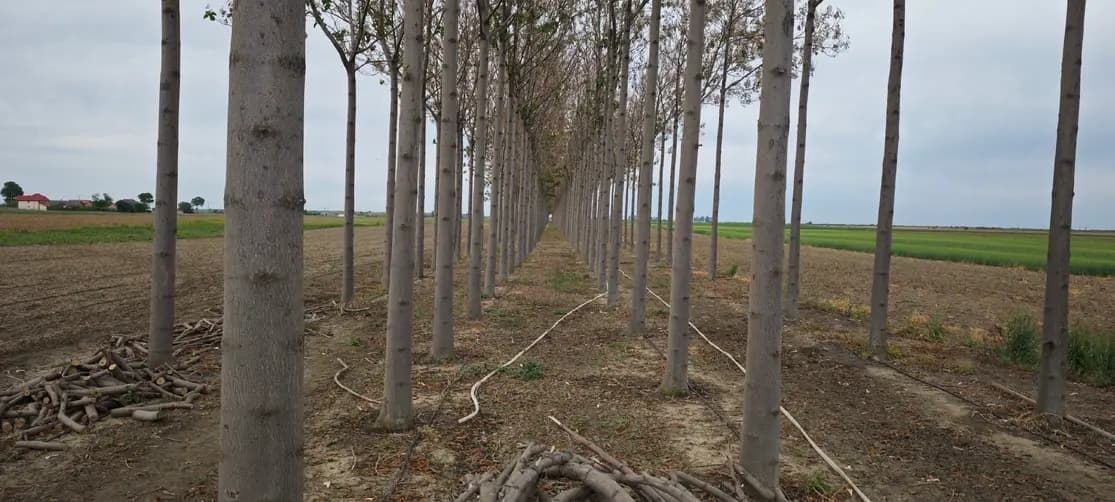
Paulownia is interesting in this area because it is not only an agricultural crop, but also a source of timber that can move into useful, saleable products. For investors seeking an alternative to purely financial exposure, this combination can become relevant.
Paulownia vs farmland
Where a professionally operated plantation differs
Farmland is a classic real asset. Yet it does not automatically come with a growth and integrated monetization model. With Paulownia, the investor can participate not only in a biological asset, but in a process that produces timber and can feed commercial chains with higher added value.
The essential difference, however, is execution. Without water, irrigation, maintenance and a clear monetization strategy, Paulownia does not automatically become a superior investment. With those elements in place, it starts to look like a serious diversification component inside real assets.
Inflation protection
How investors think about inflation and tangible assets
When investors talk about inflation protection, they often mean assets tied to real goods and services. The idea is not that those assets mechanically rise in every context, but that they have a more direct relationship with the physical economy than purely financial instruments.
In the case of Paulownia, that logic is supported by the fact that we are dealing with timber mass, processing and useful end products. If the operating model is strong, the investor can view the project as a real asset with economic meaning beyond stock-market sentiment cycles.
Verdant conclusion
Why the operating model matters so much
Investors are not just looking for real assets. They are looking for real assets that can be managed professionally. At Verdant, that is precisely the proposition: the partner brings capital while we handle planting, irrigation, maintenance and monetization. This takes the Paulownia discussion from theory to a concrete operating model.
For portfolios seeking diversification and a stronger link to the real economy, Paulownia can be an interesting component. But it must be assessed as a complete project, not merely as a species or a broad idea.
Real asset FAQ
Frequently asked questions about real assets and Paulownia
Why do investors look for real assets during inflationary periods?
Because these assets are closer to the physical economy and can behave differently than listed or purely monetary instruments.
Is Paulownia equivalent to owning farmland?
No. Paulownia is better understood as an operational model tied to plantation management, infrastructure and timber monetization, not as simple land ownership.
Can Paulownia automatically protect against inflation?
Not automatically. Any protective effect depends on operations, plantation quality and how the timber is monetized.
Why does the operator matter so much in this type of investment?
Because infrastructure, water, maintenance and monetization are what turn a real asset into a coherent economic project.
More from Verdant
Related articles that support the decision process
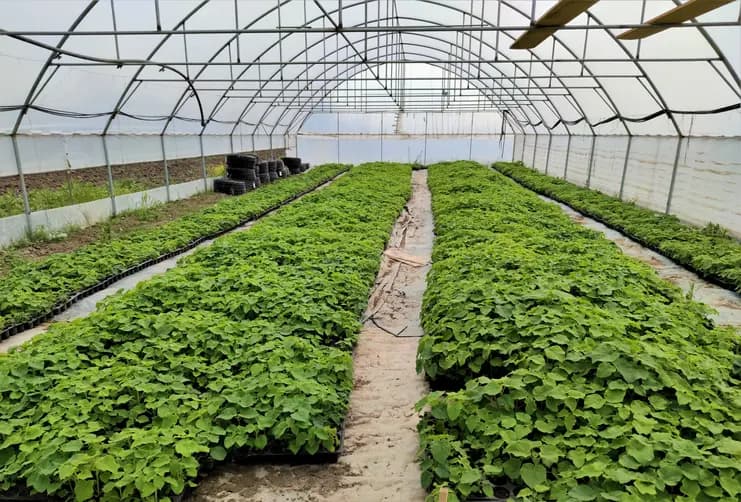
What an investor actually buys in the Verdant plantation: trees, infrastructure or a complete operating model?
We clarify what sits inside the Verdant investment model: not only trees, but irrigation, maintenance, annual operations and a full monetization path.
Read articleHow to reduce risk in a Paulownia investment: water, maintenance, management and monetization
A practical article for investors who want to understand where real risks appear and how they can be reduced in a well-operated project.
Read article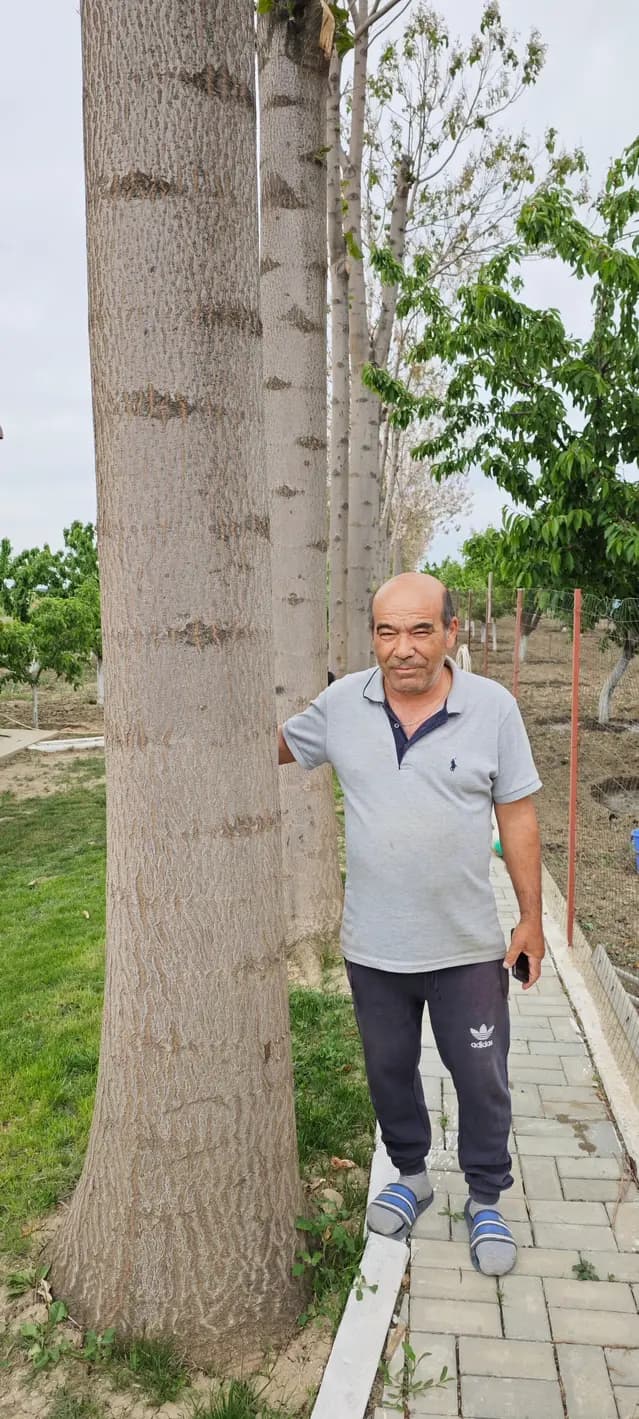
How much can one hectare of Paulownia produce and what drives the final outcome
We explain why per-hectare output is not a single number and how water, density and monetization change the result.
Read article
Social media
Verdant on Instagram and YouTube
Instagram
View profileVerdant Instagram gallery
A curated stream of our latest visuals from Instagram activity.
YouTube
View channel