Verdant News | Risk management
How to reduce risk in a Paulownia investment: water, maintenance, management and monetization
Every real-asset investment carries risk. In Paulownia, the healthiest approach is not to pretend risk disappears, but to show through which infrastructure and processes it can be controlled. In the Verdant model, risk reduction starts with water and irrigation, continues with annual maintenance and closes with a clear monetization strategy.
Core risk
Water is the first line of defense
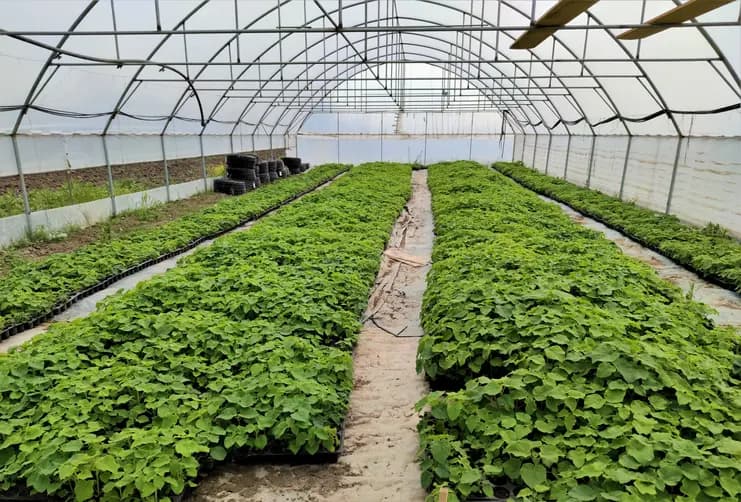
In Paulownia investments, water is central, not secondary. Without access to water and without irrigation introduced at the right time, the investor remains exposed to a major risk: uneven growth, stress inside the plantation and lower chances of producing valuable timber.
That is why, in our relationship with partners, we strongly advocate irrigation from the beginning. It is one of the clearest risk-reduction decisions available, because it affects both biological output and project stability during critical years.
Operational risk
Yearly maintenance separates a managed plantation from an abandoned one
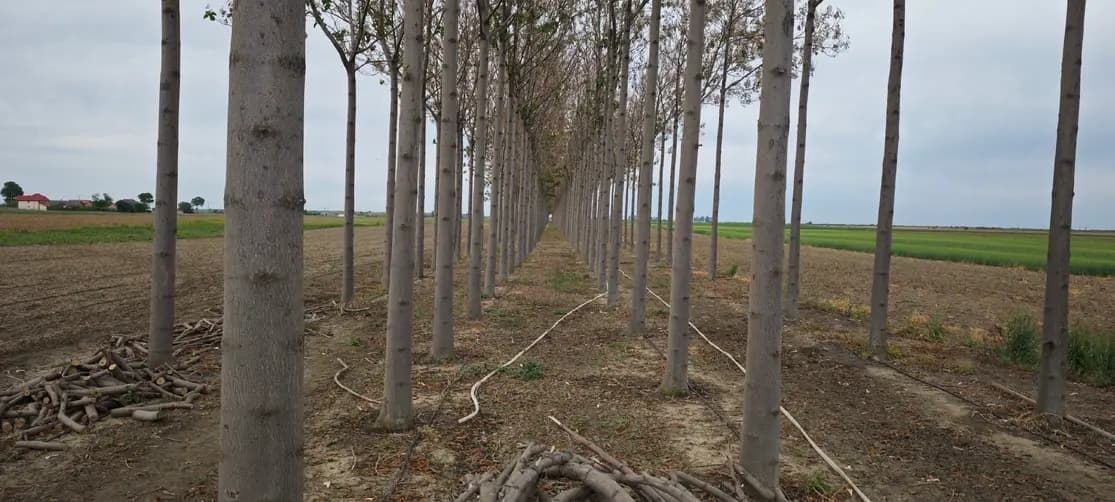
Planting is only the start. The real risk shows up in the following years, when the plantation must be monitored, cleaned, shaped and kept in strong technical condition. Without that work, a project can look good in a brochure and weak on the ground.
In the Verdant model, the investor is not expected to solve that part alone. We monitor and intervene systematically in order to keep the plantation on track, which reduces the risk of the investment degrading because of weak execution.
- ground cleaning and field control;
- pruning and shaping for correct development;
- monitoring tree growth and response;
- keeping plantation infrastructure operational.
Economic risk
Monetization is what turns the plantation into an investment
Many investors mentally stop at the planting and growth stages. But economic risk only truly declines when there is clarity about what happens to the timber: how it is prepared, which channels it can enter and who manages that process.
At Verdant, the model is designed from planting all the way to monetization. That helps the investor view the project as a complete system rather than only as a biological growth story.
Verdant conclusion
How a serious investor should think about risk
The investor should not look for a “risk-free” project, because that does not exist. A better approach is to look for a model where risk is understood, allocated correctly and reduced through infrastructure, water, operations and monetization.
In Paulownia, the first sign of a mature project is exactly this mindset. If there is water, irrigation, maintenance and an operator able to take the plantation all the way to monetization, the investment profile becomes significantly healthier.

Social media
Verdant on Instagram and YouTube
Instagram
View profileVerdant Instagram gallery
A curated stream of our latest visuals from Instagram activity.
YouTube
View channel